Apply to the workshop via this link : https://lochot.org/workshop-melia-roger/
© Jack Young
Workshop Description
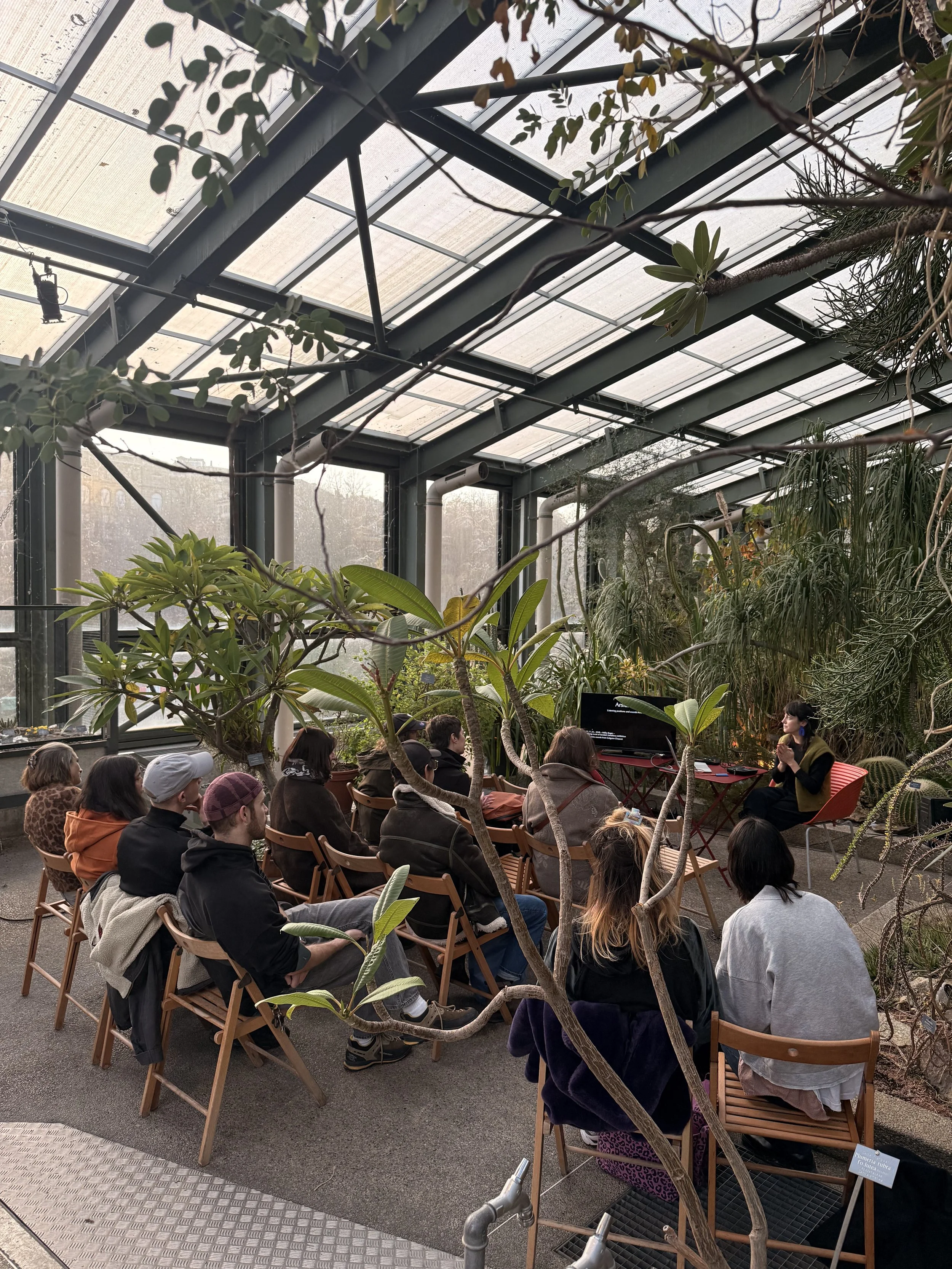
How can we respond to the environmental crisis we are living through? Can sound and listening help us slow down and transform our relationship to landscapes, living beings and one another?
Taking the concept of the Phonocene as a starting point, this workshop invites us to consider our era through its sonic dimensions. It begins with a simple proposition: listening is never neutral. It is a situated, embodied act that shapes how we inhabit a place, and it can become a form of attention, care and even resistance.
Set in the village of Azillanet and its surrounding landscapes (garrigue, rivers, vineyards, woodlands and caves), the workshop offers a space for collective research and artistic experimentation. Through field recording, attentive listening, theoretical discussions and practical explorations, we will investigate our relationship with the sonic environment, questioning our position as listeners and considering how artistic practices can open up new ways of relating to the places and living beings around us.
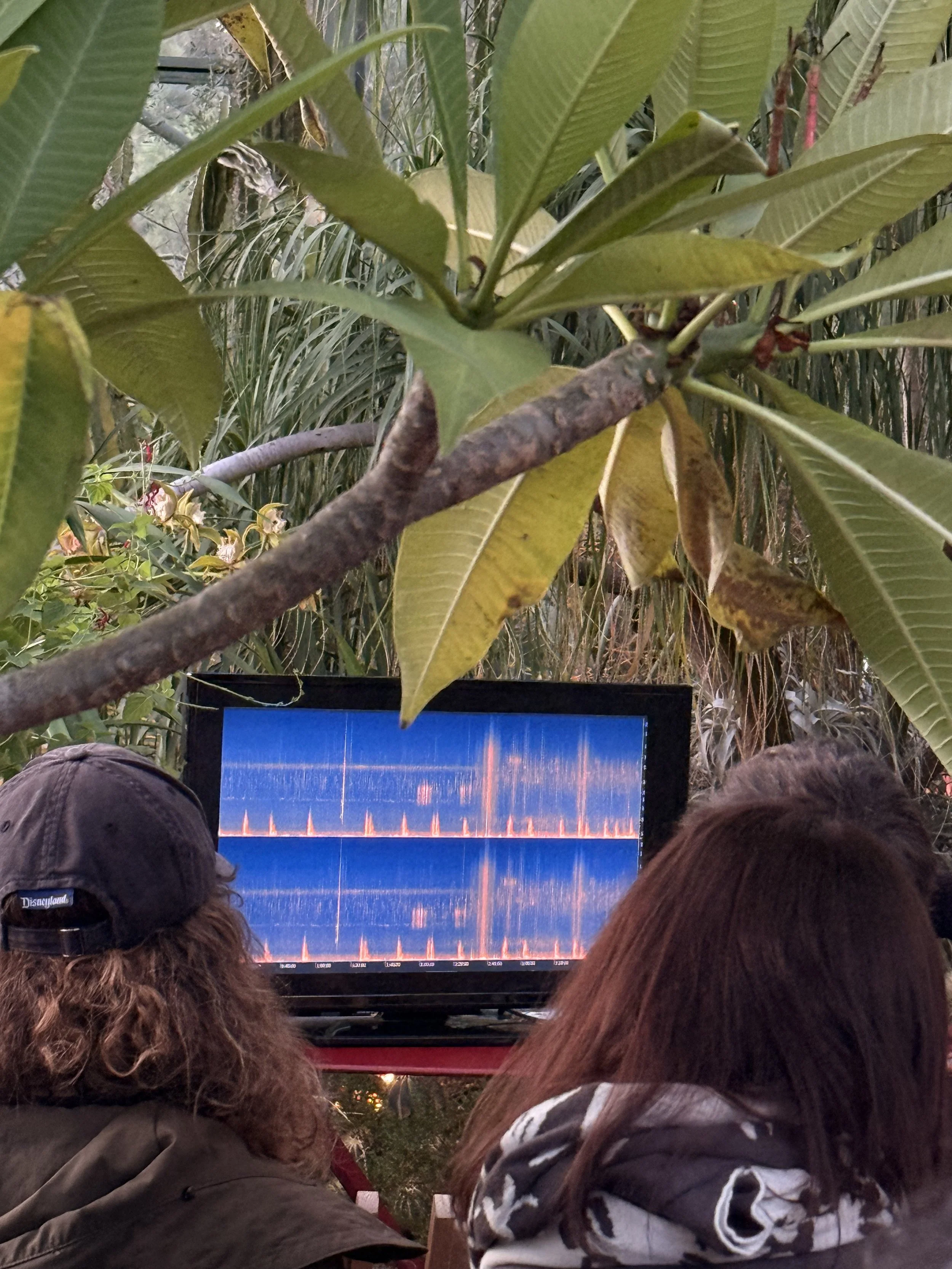
Throughout the week, we will move between fieldwork and shared moments of reflection. We will revisit the history of acoustic ecology and encounter concepts such as soundscape, schizophonia, noisy-non-self and post-nature. We will discover works by artists exploring the sounds of the living, alongside approaches from ecoacoustics, bioacoustics, animal tracking and audio-naturalism. These perspectives will also lead us to question our own practices: What equipment do we use, and where does it come from? Who listens, and from what position? How might we listen beyond the limits of human perception, drawing inspiration from scientific approaches such as passive acoustic monitoring?
We will also experiment with different ways of listening and interacting with a place through sound. Using microphones and sensors, wireless headphones, portable speakers and other listening devices, we will explore how sound can alter our perception of a space, reveal otherwise unnoticed relationships and give rise to new forms of artistic expression. These explorations may take the form of performances, site-specific interventions or installations, and may incorporate other media such as video, photography or digital practices, while keeping listening at the heart of the process.
Rather than working towards individual finished pieces or a public presentation, the workshop will focus on the process itself: listening together, exchanging ideas, testing approaches and developing questions collectively. Participants will work in small groups, moving between practical explorations and shared moments of reflection. The final day will be dedicated to open experimentation, bringing together the ideas, gestures and listening practices explored throughout the week.
The workshop is conceived as a shared space for curiosity, critical thinking and artistic exploration, where listening becomes both a way of understanding the world and a way of relating to it.
Workshop content
In situ listening: guided listening exercises and explorations of different listening positions and perspectives.
Field recording: experiments with stereo recording techniques, hydrophones, soil microphones, electromagnetic coils, parabolic dishes, bat detectors and passive acoustic recorders.
Performative listening experiments: exploring DIY listening devices, wearable microphones, wireless headphones and speakers, and acoustic enrichment.
Sound studies and critical perspectives: exploring concepts such as the phonocene, noisy-non-self, post-nature, schizophonia and dark nature recording, through readings, discussions and listening sessions.
Audio-naturalism: introduction to animal tracking, lookout, observation techniques and approaches to recording the sounds of the living.
Site-specific artistic experimentation: exploring different ways of responding to a place through sound, performance, listening interventions and other artistic forms.
Schedule
The schedule below may be adapted once the participants have been selected, in order to better reflect their interests and expectations.
Arrival Day
Arrival in the afternoon
Settling in, walk around the village
Shared dinner and informal introductions
Day 1: Opening our ears
Presentation of the participants, the place and the week’s programme
Deep listening exercises outdoors
Introduction to the technical setup: recorders, stereo set-ups, contact mics, hydrophones, soil microphones, electromagnetic coils, parabolic dishes, bat detectors and passive recorders
First field recording explorations, in small groups
Evening reading and discussion session around acoustic ecology and the Phonocene
Day 2: More-than-human ears
Morning listening session: discovering works by artists exploring the sounds of the living
Field recording in pairs, exploring embodied approaches to listening and recording
Introduction to audio-naturalism: animal tracking, observation techniques, Chirpity, Xeno-Canto and drop rigs
Exploring connections with ecoacoustics and scientific approaches such as Passive Acoustic Monitoring and AudioMoths
Evening listening and drawing session, exploring ways of translating sound experiences into visual forms
Day 3: Listening critically
Morning listening session: exploring artistic approaches to acoustic ecology and the sounds of the living
Collective listening and discussion around the previous days’ recordings
Introduction to critical perspectives and concepts such as schizophonia (Francisco López), noisy-non-self (Mark Peter Wright), dark nature (Timothy Morton) and others
Collective exchange of ideas: sharing ideas and identifying possible directions for further experimentation in response to the place.
Individual discussions and technical guidance to develop and prepare these experiments (sound editing, artistic approaches, technical setups and initial tryouts in situ).
Night recording session
Day 4: Listening Otherwise
Morning listening session
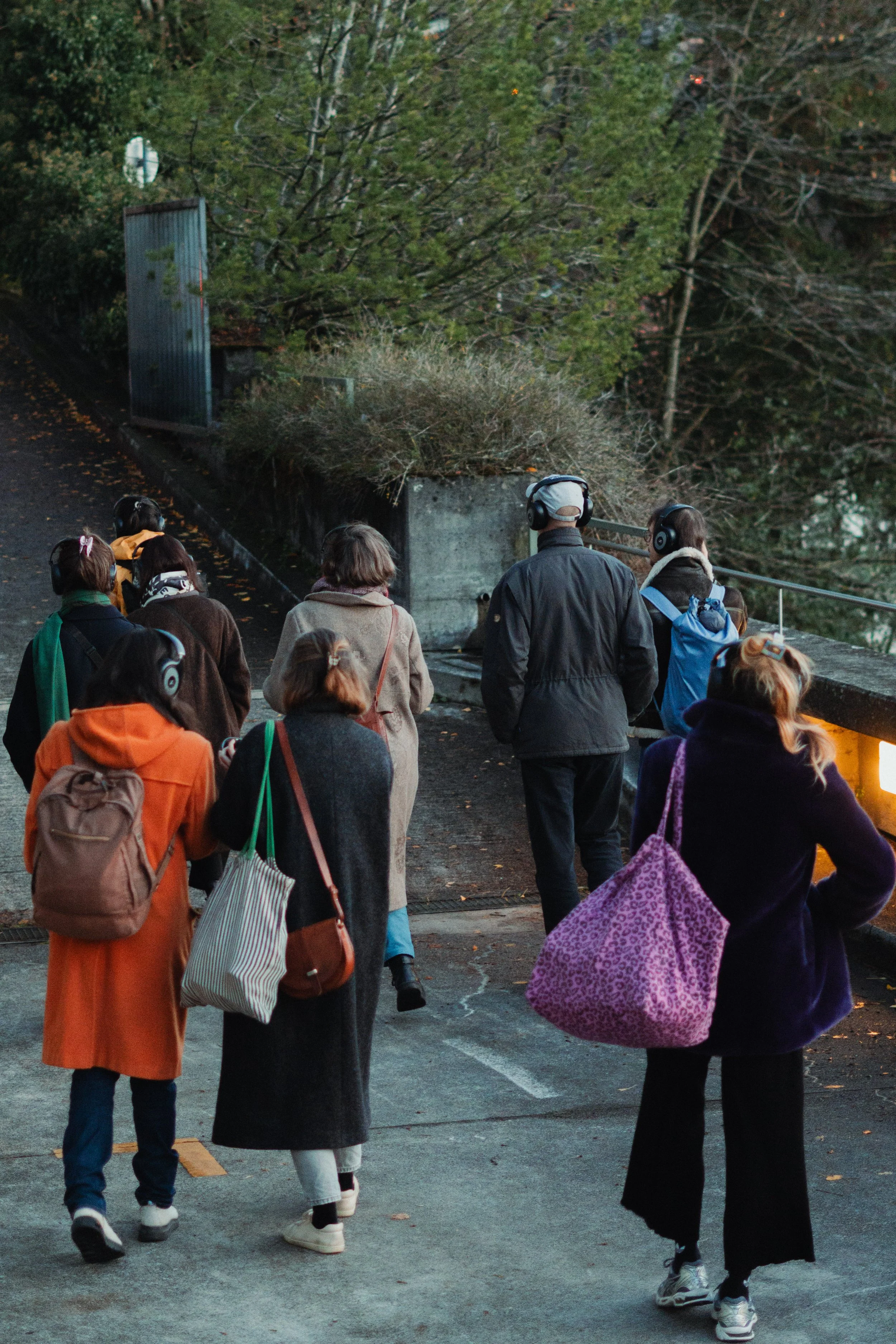
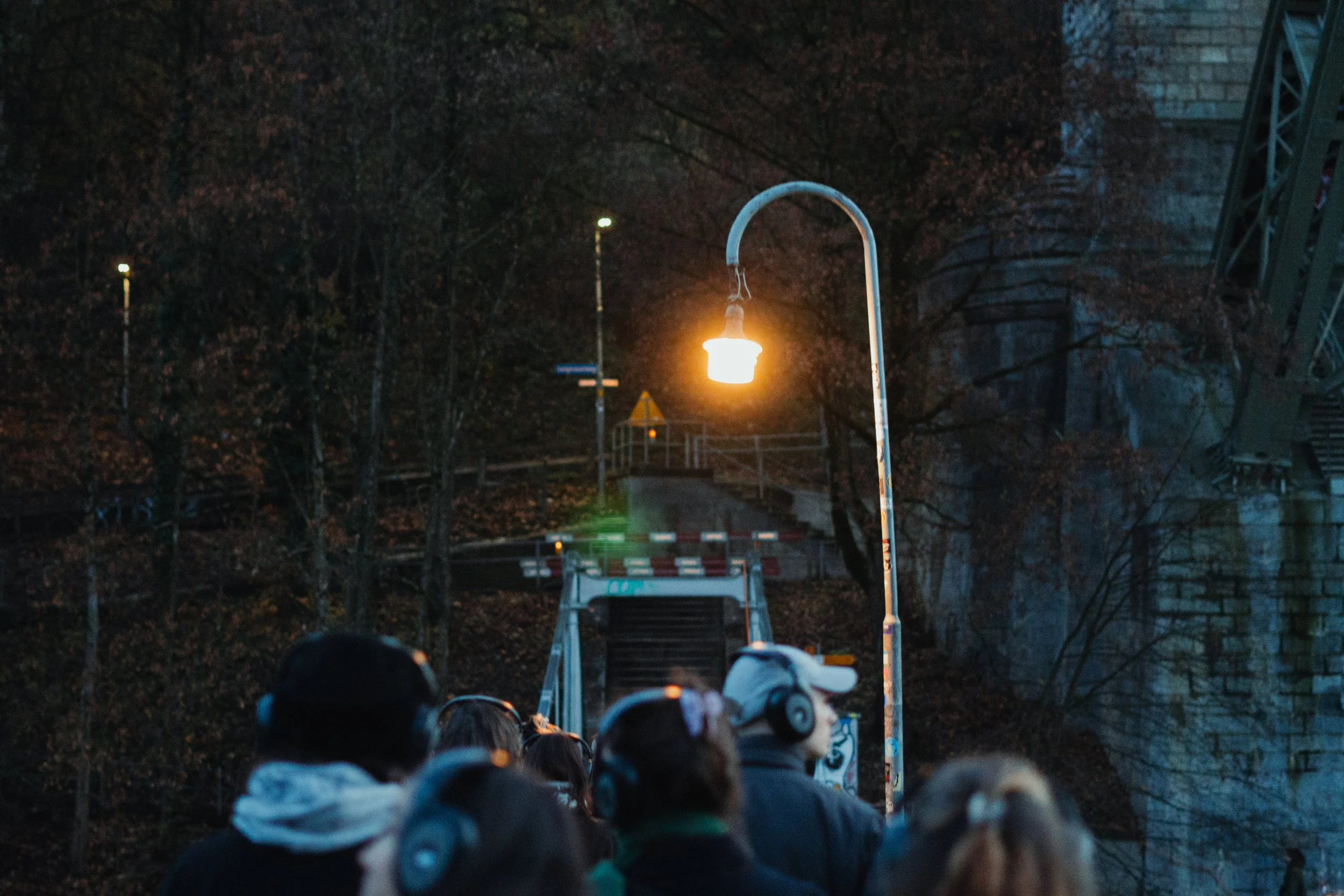
Experimental soundwalk with wireless headphones
Exploring performative and site-specific approaches to listening, including acoustic enrichment, wearable microphones, small listening interventions and DIY setups.
Field experiments in different locations around the village and its surroundings
Small-group explorations with guidance and technical support, developing and testing different approaches and listening devices.
Day 5: Sharing
Morning listening session
Small-group experiments building on the week’s explorations.
Sharing experiments on site with the rest of the group, allowing everyone to experience different approaches, gestures and listening situations.
Collective exchanges and feedback: discussing observations, sharing ideas and suggesting new directions for further exploration.
Final group discussion and reflection on the week’s experiences.
Closing dinner
Departure Day
Departure in the morning
Who is this workshop for?
Participants should already have some experience with sound practices (recording, composition, performance, installation…). No specific technical level is required, but curiosity and openness to experimentation are essential.
Practical Information
5-day programme · 9 am – 6 pm (flexible hours), approximately 40 hours in total.
5 days / 6 nights
Total price: €900, including access to recording equipment, 6 nights in shared accommodation, delicious home-cooked meals (breakfast, lunch and dinner), drinks (coffee, tea, herbal teas, fruit juices, water and wine), and return transportation from Narbonne train station.
Places are allocated on a first-come, first-served basis, with a maximum of 10 participants.
Reduced rates are available for young people under 25 and local residents living within 15 km of Azillanet.
Single rooms are available for an additional €60.
Next Workshop Dates
Ecologies of Listening workshop with Mélia Roger, in English, 28 June – 2 July.
Apply to the workshop via this link : https://lochot.org/workshop-melia-roger/
